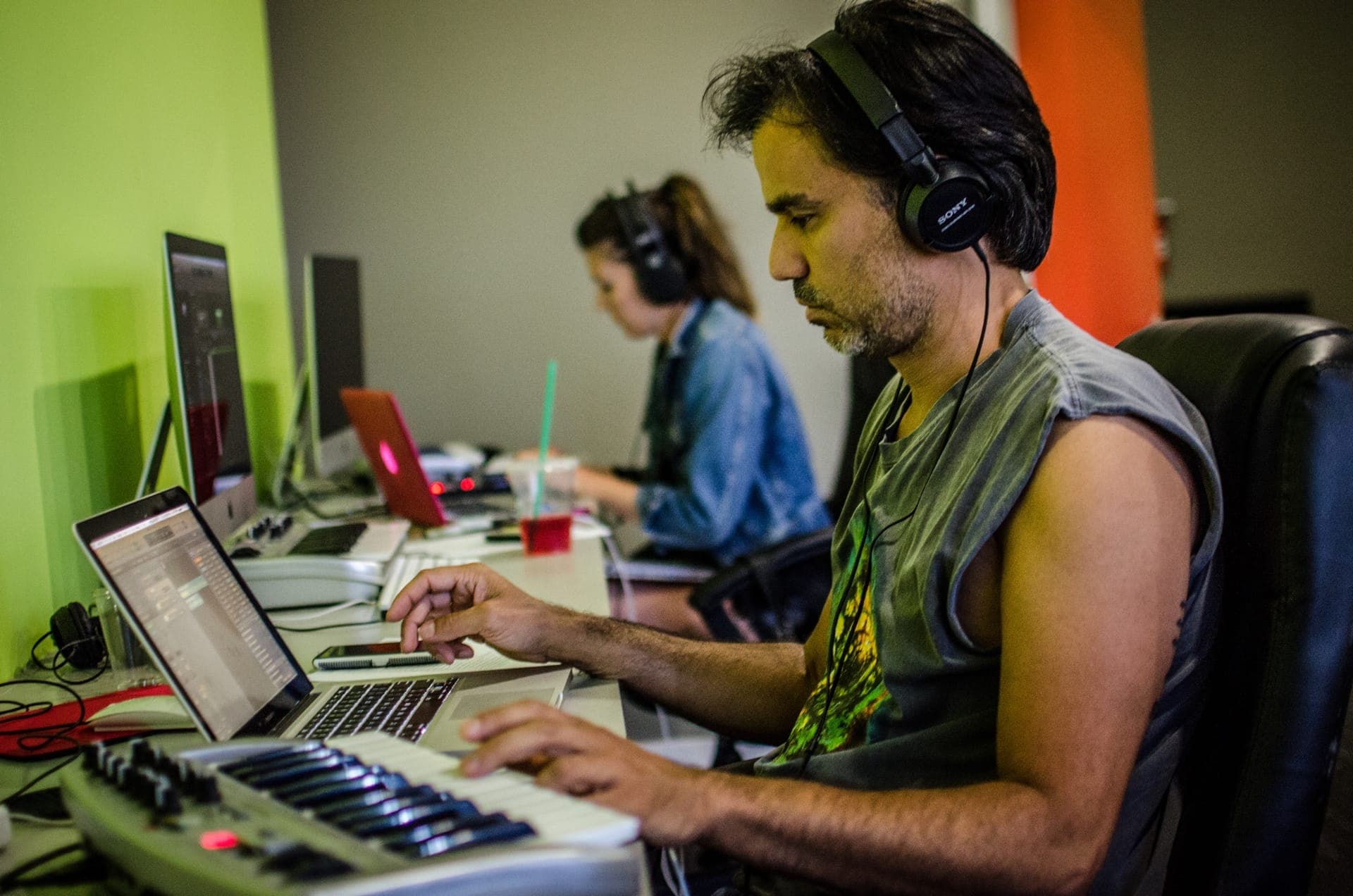
Mixing & Mastering Course | Berlin
Mixing/Mix-down Course
Mixing & Mastering Course – Make Your Tracks Sound Pro
Struggling to get your mix to sound polished and powerful? Know the basics but your tracks still don’t bump like they should? You’re not alone—and our Mixing & Mastering Course is designed exactly for producers like you.
In Berlin the Mixing & Mastering Course is taught by producers working in one of the world's best-known electronic music cities. Classes are small and hands-on at our studio, and the same sessions can be attended live online, using our specialist music collaboration software, Muse.
You’ll learn how to
- →Create space, punch, and balance in your mix
- →Use EQ, compression, and reverb like a pro
- →Polish your final master for streaming and release
- →Avoid common pitfalls that kill clarity and energy
Environment, Acoustics, EQ & Separation
- →Speaker design for studio monitors
- →How to handle your home studio acoustics
- →Stereo, mono, stereo & 5.1 surround sound software
- →The delicate art of panning and balance
- →Specialist EQ tutoring to help your production
Dynamics
- →Why is compression so important and how does it work
- →Getting to grips with parameters
- →Circuitry within compression & other digital emulations
- →Parallel processing dos and don'ts
- →De-essing and gating techniques
- →Achieve amazing clarity in your mix with dynamic controllers
Delay, Reverb and other Awesome FX
- →Learn about different types of delay and reverb
- →An in-depth look at all parameters
- →Spatialization with convolution delays and reverbs
- →Harmonizers, pitch shifters, flangers, phasers and creative FX
- →How FX can transform your tracks and really bring them to life
Recording Techniques and Introduction to Sound Design
- →kd_icon icon_pack="font_awesome" fa_icon="fa-solid fa-arrow-right" size="mkd-icon-tiny" custom_size="" type="normal" border_radius="" shape_size="" icon_color="#ce1713" border_color="" border_width="" background_color="" hover_icon_color="" hover_border_color="" hover_background_color="" margin="" icon_animation="" icon_animation_delay="" link="" anchor_icon="" target="_self"] Balancing, introduction to the art of mixing. Group tracks and advanced uses of routing
- →Introduction to sound waves, frequency, and amplitude
- →The recording patch in detail, introduction to gain structure
- →EQ and compression for recording
- →Foldback, headphone mixes, and latency
- →Digital, analog, sampling rate and bit-rate explained
- →Microphones overview and stereo miking techniques
- →Recording specific aspects of Ableton
- →Compiling audio takes
Mixing Electronic Music
- →style="text-align: left;">
- →Great tips on filters for FX, punch, ducking and side chaining dynamic controllers
- →The best ways to use delay and reverb
- →How to turn subtle sounds into monsters
- →Interesting electronic mixing techniques which apply to all music
- →Learn to improve and analyze every element of the mix
- →Electronic listening critique (bring in your music)
- →Great tips on filters for FX, punch, ducking and side chaining dynamic controllers
- →The best ways to use delay and reverb
- →How to turn subtle sounds into monsters
- →Interesting electronic mixing techniques which apply to all music
- →Learn to improve and analyze every element of the mix
- →Electronic listening critique (bring in your music)
Mastering Intro (Click here for full mastering course)
- →con icon_pack="font_awesome" fa_icon="fa-solid fa-arrow-right" size="mkd-icon-tiny" custom_size="" type="normal" border_radius="" shape_size="" icon_color="#ce1713" border_color="" border_width="" background_color="" hover_icon_color="" hover_border_color="" hover_background_color="" margin="" icon_animation="" icon_animation_delay="" link="" anchor_icon="" target="_self"] A/B'ing & how to get the best from your separation and EQ
- →Leveling, phasers, EQ & brick wall limiting
- →The 'dos and don'ts' of using mastering software & plugins
- →Learn about the best metering tools and their application
- →Live music listening critique (bring in your music)
In today’s crowded music landscape, a clean, professional mix isn’t just nice to have—it’s essential. If your productions lack depth, clarity, or that final touch of finesse, we’ll show you how to fix it. Since 2010, we’ve been teaching producers how to elevate their sound using a mix of classic engineering techniques and cutting-edge tricks.
Whether you’re mixing house, hip hop, pop, or cinematic soundscapes, this course will help you dial in a professional sound—fast.
Available in-person worldwide or LIVE online. All learners must bring a laptop with their DAW of choice installed.
Prerequisite: This is an intermediate-level course. You’ll need a solid understanding of your DAW and the basics of music production. Not quite there yet? Take one of our DAW courses first—or reach out and we’ll help you figure out where to start. Discover qualities that distinguish us, here.
Student reviews.
“I have taken about 3 mixing courses online and learned something from each. This by far was the most helpful because it tied everything together and having a hands-on approach is the best. The instructor was super enthusiastic and patient as well. For the price and being a one week full session, nothing else compares.”
Biren M Patel
Instructors

Common questions, answered.
No - it's intermediate level. You'll need a solid understanding of your DAW and the basics of production before starting; if you're not there yet, take one of the DAW courses first.
36 hours, or 20 hours as 1-on-1 instruction.
Any - house, hip hop, pop, cinematic soundscapes, and there's a dedicated section on mixing electronic music specifically.
Yes - see Mixing & Mastering Private Instruction to connect with a specialist.
Yes - there's a mastering intro covering A/B'ing, leveling, brick wall limiting and metering tools, on top of the full mixing curriculum.
A laptop with your DAW of choice already installed.
€1299 + €100 Registration if booked 14 days before start or €1499 + €200 Registration
Let's get you started.
InquireWhy Garnish?
Reverb
Chambers, springs, plates and digital reverb - what each parameter does, and how to place a sound in a space without drowning the mix.
Read →The Vocoder
A Vocoder – name derived from voice coder, formerly also called Voder – is a speech analyser and synthesizer.
Read →Filtering
How filters shape a sound - low-pass, band-pass, comb and notch - plus resonance, envelope control and using filters creatively in a mix.
Read →Acoustics: The Basics
Why room shape changes what you hear, what standing waves do to your low end, and what RT60 means for a small studio.
Read →Mixing in Dolby Atmos
Not surround sound and not more speakers - a different way of describing where a sound is. Beds and objects, the room you probably do not have, why the loudness war was never possible in Atmos, what changes about mixing and what does not, and how to deliver it.
Read →Mixing Desk Basics
Subgrouping a mix, using reference tracks properly, and keeping your monitoring level honest over a long session.
Read →